Showing posts with label community. Show all posts

Aug 14, 2026

RIDE ALONG: Incredibly Fast and Not At All Fun!

 As summer winds down, those who adore roller coasters and theme parks should be getting their roll on while they can. To share that experience (and examine it more closely) a new picture book has released. INCREDIBLY FAST AND NOT AT ALL FUN is the imaginative and marvelous new title from author/illustrator Tadgh Bentley. 

ATHENEUM
BOOKS FOR YOUN G READERS, 2026


The premise of this story is a surprisingly imaginative origin story for the first roller coaster ever. Bear (a big-muzzled beekeeper bear with some serious STEM skills) sets out to solve a problem. The wooded valley between his hilltop home and his hive (located on the other side of the valley) is (over) populated with critters! Bear needs  a quick, undistracted transport system to get from here to there, so to speak. 

Opening AND closing end papers nearly waylaid my efforts to read Bear's determined account while I scrutinized the graphic-design/blueprint style details revealing Bear's intended solution. The design drawings incorporate local terrain, creating a need for rising/falling, twisting, twirling layouts, with practical (and laughable) units of measure in length, labeled "bears". Why not? We measure length in "feet". 

Bear called his device the "Honey Runner". Although steep, and perhaps intimidating, the potential for efficiency outweighed his concerns. And, it worked! But Bear's debut ride was observed by countless woodland eyes, and those critters were curious! They begged to ride along. 

The story unfolds with those eager thrill-seekers clamoring for more exciting rides.  Complicating issues arise. Bear's attempt to simplify his life with an efficient transport system becomes anything but efficient. As you probably imagine by now, more engineering is involved, but that only makes the "Honey Runner" that much more exciting. 

No worries.Clever Bear finds a way to satisfy his thrill-seeking forest neighbors while still pursuing his quiet life. But that last page turn will have readers howling and ready to right a next chapter in Bear's story. 

First, all praise for the main text, which crackles with crisp and comical situations and language. Bear's emotional journey, including frustration and exasperation, will take readers on a ride in itself. And the small details (and I do mean small, including in earliest spreads shown with miniature scene set-ups and signage) will have kids poring over each spread, each little critter's expression, and each transition's potential through repeated readings. 

Bentley is as talented at visuals as he is at storytelling. This oversized book allows for expansive and colorful spreads suggesting nature's sprawling invitation to Bear to make a way through. The forest colors glow with fall foliage, offering a vibrant background for small brown silhouettes, each with bright white eyes. Figures are expressive and soft-edged in contrast to construction elements and detailed plans. 

Those eyes, by the way, deserve their own commentary.

First, I'll admit that manga-like, big-eyed characters in picture books are not my first choice in conveying character or personality. This forest population, though, sports white-eyed, wide-eyed expressions in a variety of angles and attitudes that actually reveal their otherwise limited expressiveness rather than looking endlessly repetitive. The eyes make it clear within dense backgrounds that there are SO MANY of them, as bear seems to be thinking. Yet his heart is tugged to give ride after ride and eventually solve the situation he confronts in those  pleading, begging, eager eyes, always aimed exactly where they must be in order to achieve their intent and to direct readers' attention. 

The overall story is a delight. Creators are often told to find something original, that there are plenty of dog stories, cat stories, bear stories, etc. ... UNLESS you can find something truly original to do with those familiar stars of the show. And this book does exactly that!  It dares to pair a nature/woodland scene with a lovable bear and a lively community of neighbors with a ROLLERCOASTER! A ride with swooshing, gasping speed, with curves and turns and twists that lift off the page could cause shrieks from audiences. It invites reading aloud to giggling groups as well as close scrutiny by chuckling children. 

For sheer fun and entertainment, this can't be beat. If you add to that its potential connections to planning and revision, problem solving, community needs, transportation, SEL, predictions, and more, it earns its place in families, classrooms, libraries, and the hands of anyone, any age, who loves rollercoasters!


Bentley is also the creator of popular early chapter books and easy readers featuring DINO DETECTIVE, LITTLE PENGUIN, and more. Click on the website to take you to an opening page that reveals sketches and image drafts unfolding bit by bit, not unlike Bear's planning sketches on end papers. 


Jan 2, 2026

New Year Resolution: TOUCH GRASS (Leaf Town Forever)

 There are so many ways in which I'm "out of the loop" when it comes to social media and current lingo. Am I alone in STILL not understanding what six-seven means as it leaves center stage and something new takes the spotlight? But TOUCH GRASS is one phrase that I have understood from first hearing, and one that just might be the basis for a New Year Resolution that you won't regret. With digital lives and gaming and social media and texting and.... "all the things" filling our adult lives and those of our kids, TOUCH GRASS is that reminder to PUT DOWN the electronics and get outdoors. If you are in a climate that involves snow and ice, then seasonal rewording is welcome. Touch snow, touch buds, touch grass, touch blossoms, touch crispy fall leaves, touch evergreens. Whatever you do, the TOUCH part is what matters. It's more than just going outdoors and looking around. The premise of the prompt is to engage, to make yourself a part of the nature scene surrounding you. 

In the same way that petting a pup or listening to birdsong has been demonstrated to lower blood pressure, engaging with nature, mindfully and intentionally, can bring us back to ourselves. It can certainly return us to the pressures of digital demands with renewed and refreshed mental and physical health. That is even more true for young folks, and is one of the few strategies that allows young digital devotees to willingly opt out of electronics and into the real world. 

University of Minnesota Press, 2025

This brings me to belated attention to, and praise of, a fall release,  LEAF TOWN FOREVER, co-authored by Kathleen Rooney and Beth Rooney, with illustrations by Betsy Bowen. Inspired by a true story (actually a series of events spanning several seasons), and revealed through haiku and warm, child-like illustrations, the physical LEAF TOWN FOREVER occurred spontaneously during covid. Kathleen Rooney writes, teaches and publishes poetry, while her sister Beth Rooney is a journalism photographer. This story uses Haiku form in connected poems that describe the origins, threats, and success of LEAF TOWN. 

During Covid, playgrounds were closed, but the field behind their school was not. Three friends, girls, head out one fall day and recognized beauty and treasures everywhere. gathering, sorting, enjoying, they spontaneously imagined a treasure shop of lovely leaves, acorns, lost rings and other bits, and superb specimen leaves (oak, locust, ginkgo, and more). The leaves could build homes, pave paths, generate neighborhoods, and identify various roles (shopkeepers, worker/collectors, builders, and more). Their exercise in  imagination and action invited peers to join the fun, spanning weeks and unearthing wonders. 

Every heartwarming story such as this needs a line of tension, and this has one, also spawned by the actual events. Neighbor kids noted the daily dev developments and entered the scene with destruction and theft in mind. A fight ensues, but the once-discovered key that had been declared the heart of the town was preserved. The original builders set about restoring the town, building-back-better, as is sometimes said, and also preparing for possible attack (pine resin and needles at the ready). When neighbor kids returned it was made clear: join in or prepare to fight and lose, again and again. 

The expanded community grew and collaborated and was enjoyed through the seasons, with the opening refrain "Leaf Town Forever" produced on a sign that foretold years of life for the nature-village-imagination-socializing-source. The details are rich and revealing, including surrounding wildlife, and the relationships are understated but undeniable. Each year the current group presents the key, that "heart of the town", to the children of the next class. 

There are many things stated as if "rules" for writing successful picture books in "these days". They include featuring very young children, not spanning weeks or months or (NO!) years! Making the story strong on many hooks (appealing themes and topics that will help it sell) and comparable to other good-selling books. Well, this clearly shows that a good story, well-told and illustrated, one that stands apart from other current material can and will rise to the top. This table of school age kids, in a single setting, with poetic narrative and sufficient space for readers' own imaginations can, and will, find its footing and fans. Links to many of the praise-filled reviews about it can be found HERE, and its title has surfaced in discussions of year-end picture book awards.

My own praise for it relates to the appeal of the lyrical narrative (in actual poems that are readily accessible to all readers) combined with the leafy, lush illustrations that suggest natural; materials and outdoors. This delights me most in the unstated truth and enticement of time spent outdoors, in company of friends, with undirected and certainly unplugged play leading to a rich commitment to their joint effort. The solidarity of collaborators in the face of threat, their willingness to welcome the threateners into a wider circle of community, their sense that nature and all that it encompasses (including random detritus) has immeasurable value wrapped me in wisdom from the opening pages to the close. TOUCH GRASS has never been more clearly demonstrated than in this new picture book. I urge readers to give it your time and attention, to share it with kids of many ages, and to help spread this word for this small-press wonder. 

Thanks to University of Minnesota Press for a sample copy to be read with no promise of a review.


Nov 4, 2025

Early to be Waiting for A SNOW DAY FOR AMOS McGEE, But...

It's still early in November, so these drought-stricken midwest streets include some autumn leaves still clinging to trees and clustering along fence lines. Snow days seem a distance memory, even when overnight temperatures have us tugging on a blanket along with our summer sheets. 

On the other hand, snow will come, eventually. And the time is always right to welcome a picture book by the phenomenal creative team of writer Philip C. Stead and illustrator Erin E Stead. Both have produced outstanding offerings in recent years, individually and as a team. But their joint creation, the irresistible zookeeper AMOS McGEE, has not had another starring role since the CALDECOTT MEDAL graced the cover of A SICK DAY FOR AMOS McGEE in 2011. 

Roaring Brook Press, 2025

We needn't wait to celebrate A SNOW DAY FOR AMOS McGEE with the gleeful excitement of the first snowfall of the season. Both the text and the illustrations are tender and gently-paced. The story unfiolds slowly, allowing multiple spreads to absorb the calm and depth of life in Amos's little house. I kept wanting to ascribe another word to the title, "Waiting", since that's what the early pages introduce and take time to explore. His bunny and mouse housemates are just two of the many animal companions that populate his life, on the bus, at work, and back at home again. All waiting.

The fine line illustrations are, in part, black-and-white, while others are colored in the most delicate of natural tones. Text, too, ranges from sheer simplicity to remarkably touching elaboration, as evidenced on the first page:


"Amos McGee loved the snow. Every morning as winter approached, he wrapped himself in  a cozy blanket and listened in hope to the weather report." 

Straightforward and clear, pure and simple. Then the next lines hit you in the heart:

"Amos liked to imagine that his radio was a crackling fireplace. He warmed himself each day with the possibility of good news."

Black and white. Then subtle, heart-throbbing color.  Magnificent.

Throughout the book readers will notice echoes of the original Amos title, not only in the characters and setting, in their comfortable companionship, but in the butter-sunny yellow stripes on the wall, in McGee's little cottage tucked between massive buildings, not unlike THE LITTLE HOUSE by Virginia Lee Burton. Anachronistic, but not the least bit uncomfortable in its place in the world. This could describe the AMOS McGEE books to a "T". The touches of humor throughout have the deft subtlety and smile-making power, with page after page of special details to be noticed on every turn.Nothing is rushed, overplayed, or exaggerated.

And every bit of it is not only enough, it is absolutely "just right".

Patience is a virtue that pays off well in this gem. We are halfway thru the book with only "waiting", although McGee's preparations and faith fill  that first half and give little readers faith and hope. It is only at the midpoint when the fantastical fun begins. The menagerie from the zoo, comfortable in their hand knit wrappings, make their way to McGee's front door. The most  delightful blend of familiar  snow antics with "Let the wild rumpus begin." (WHERE THE WILD THINGS ARE, SENDAK) captivates and inspires bliss. There is no scrimping on the joyful play, page turn after turn. But a double spread and final single page is reserved to provide one of the most perfect endings you'll find in a picture book.

This is another example of a picture book that will enchant youngest listeners, delight older kiddos, and fully entertain adults. It's original as well as nostalgic. 

Roaring Brook Press, 2011


On the rare chance that you missed the original, be sure to check out A SICK DAY FOR AMOS, too. In fact, give it another look, even if it is an old favorite. It has aged well and is a lovely companion 
title for gifting!


Sep 26, 2025

To Be or Not to Be- a Picture Book?

UNION SQUARE KIDS, 2025


THE SHINDIG IS COMING,
written and illustrated by Charise Mericle Harper presents a bit of a dilemma. I enjoyed it so much and was sure to share that delight in some way. But did it fit here, as a post on a blog about picture books? Although not numbered, I'd estimate the page count at about 64, double the typical picture book. The word count also far exceeds the  typical recommendation for picture books of about 500 words. Some pages are only, or nearly only, text. There's no reason I would "object" to it being an early reader or easy chapter book. Early chapter books are delightful and essential in young reading lives. Still...

The humor and storytelling in this new book is unsurprisingly superb, well-paced, and rich with nuance and humor. Despite its physical appearance of an early chapter book, I'm convinced that this certainly qualifies as a picture book. That's based on the essential role of the mostly-silhouette illustrations to achieve full meaning and much the humor. The images and text invite rereading as picture books do, and more so than an early reader or chapter book does. The ample white space on each page, the text size and line spacing, too, make this easy on the eyes and satisfying to the heart. Mostly, though, as a text-only book I would not be singing its praises in this way nor have fully grasped the tension, humor, or the depth of the characters.

This clever little tale is a sort of Chicken Little account. But in this case the coming disaster is a SHINDIG! The various animals each provide  character insights, making the story into an ensemble cast rather than focusing on a single protagonist. I strongly recommend this for use with young audiences to explore ways in which book formats should be chosen to best suit their purpose.

I doubt that using a basic/traditional picture book format, even in the hands of a skilled writer like Harper, could do justice to the complexity and pacing of this evening woodland gathering. I particularly appreciated the many subtleties of nature that are blended into an otherwise  anthropomorphized situation. Animals that naturally prey upon and avoid each other are shown to come together for their common good. Their animal natures are respected (as in a grumbly, hungry bear, or that lovable opossum whose instinctive survival mechanism of fainting/playing dead makes him the most vulnerable of all). The charm of their shared concerns, competitive natures, individual differences, and that ominous SHINGDIG  (fear of the unknown) make for a modern day classic with strong potential for frequent re-readings and discussions. 

And I intend to recommend it often. When I do, I have no qualms about calling it a picture book. It is both whimsical and profound, a good reason for celebrating with a shindig!

Aug 19, 2025

IT'S CORN PICKING TIME! A Must-Harvest New Picture Book

 In case you are unfamiliar, I want to call out author JILL ESBAUM as a master of rhymed text in picture books. Click on her name to see full shelves of titles she's created. Two of my favorite, most heart-tugging titles are WHERE'D MY JO GO? and TEENY TINY TOADY. I always think of Jill's books when I hear familiar advice to writers of picture books, that they should avoid rhyme. The second half of that advice is not always linked, but it matters the most...

UNLESS YOU CAN WRITE IN RHYME PERFECTLY! 

and, sometimes added...

UNLESS IT IS THE BEST WAY TO TELL YOUR STORY.

That's a high bar indeed, and authors like JILL ESBAUM raise the bar even higher. Not all of her books are in rhyme, but those that are bring enhanced rhythm and pacing with lively and natural language to share the stories even BETTER than prose might. As someone who sometimes writes in rhyme, I consider Esbaum's books to be the gold standard for deciding if my rhyming efforts are improving the story or detracting from it. Her rhymed text, when she chooses to use it, make the results feel like those stories were BORN rhyming. 


NEAL PORTER BOOKS, 2025


IT'S CORN PICKING TIME
, illustrated by Melissa Crowton, is an ideal example of excellence in rhymed text, with the added challenge that this is an excellent informational picture book!

The first lines made me imagine this would be a variant on "This is the house that Jack built." There are several superb picture books that use that template, and I had no doubt that Esbaum would do it well. But I was surprised and pleased to see that she used only that short intro phrase to explore (along with vibrant and only slightly abstracted images throughout) the people, places, tools, processes, and majesty of corn harvest on a modern farm. 

"This is a farmer, her hat and her gloves,

This is the farm, a land that she loves."

are the opening lines that set not only the launching scene for corn-harvest day but also the warmth and emotional depth of life on a farm. An effort to construct a cumulative text would not ahve allowed each of the elements of this remarkable process to shine on its own.

From the screeching barn door to the keys tucked on a high shelf, readers are invited into THIS SPECIFIC farm, to join THIS farmer in THIS harvest. It becomes a very personal experience, and the stages involved rise above what I know to be a dusty, hot, exhausting task into satisfying, gratifying, and important work. It is also clear that farming, though occasionally lonely, is not a solo operation. Various folks of diverse ages, roles, and conditions play important parts. Even random bugs have their very authentic place on the shed shelves. 

I was particularly impressed with the natural flow of language, with accurate terminology feeling natural and accessible within nearly musical text (chaff, auger, combine). The morning-to-night framework for the harvest story incorporates soaring scavenging birds, collaborative coworkers, prowling farm cats, a faithful watchdog, and young ones. 

This is a story in which the corn is the star, but the adult farmer (female, POC) orchestrates the performance. Another frequently stated "rule" of writing picture books is that kids need to play the lead role, to solve the problem, etc. As with the prior-stated advice, this is often true. Unless it can be done as masterfully as this. The adult farmer is in every way integrated with her own family, other workers, and even into a society at large. 

And the land. Always the land.

Back matter is handled equally well. Final spreads describe "LIFE ON A CORN FARM" through simple Q and As, along with enhancing spot illustrations. Jill and her husband live on a farm in Iowa, a home that has been in their family for over a hundred years. That suggests to me that the facts are reliable, but also that the heart of it is also authentic. As someone with farm family background, there's no denying that farming of any kind is demanding, wearing, and even sometimes heartbreaking. And yet farmers stay, and farm, and root themselves into the processes that feed us all. I admire this latest Esbaum effort  for its skillful informational content, for the natural cycle of a day on the farm, and, of course, for the perfectly written rhyme. Illustrator Crowton shares my the praise for the many ways in which the color, design, and details portrayed expanded the warmth and clarity of CORN PICKING TIME!


Aug 10, 2025

What ONE CAN BE... Take a Look

 Some, (actually, quite a few) picture book authors reliably create books that quickly become not only successful but special. Pat Z Miller is one such author, one I'm privileged to call my writing friend. Click on her name and to see many examples of her books: most fictional, some non-fiction, in prose and rhymes, for youngest audiences and for school age. In case the author's name doesn't ring a bell, think of NYT Bestseller BE KIND, or SOPHIE'S SQUASH, or WHEN YOU ARE BRAVE. The point I'm making is that this is a writer who takes tremendous care in turning good ideas and clever concepts into timeless books. 

Writing about kids who are alone, being ONE, is not unusual. Many of the picture books with that theme take one of several approaches. Some work to distinguish being alone from being lonely. Others pursue stories of kids who are alone but long to engage with others, exploring ways to take such steps into a wider community. Some celebrate the vast world that can exist within an individual mind and heart. 

BEAMING BOOKS, 2025


ONE CAN BE
, written by Pat Z. Miller and illustrated by Annie Cron, takes a familiar premise and expands its potential into a story with multiple layers and depths. This is a charmingly multi-diminsional approach to a child who finds comfort and joy in being alone with her books and other creative outlets, including her dog, plants, etc. She recognizes, though, that there can be fun and purpose in joining forces with others. In her case she is neighbor to a vibrant outdoor park, and she notes the fun being had there. She also notes the lack of books there. Joining in community shouldn't require leaving behind the things you love while on your own, right? 

In several spreads she channels her creativity to design and attempt to build a little free library. Ideas and effort abound, but this "one" realizes that friendships can offer company and collaboration. The design and building process she instigates had whispers, to a degree, of Miller's A GIRL CAN BUILD  ANYTHING (great to pair these titles). As the park folks interact with "one", other things build as well, on all fronts: friendships, love of reading, pet connections. 

Nothing is compromised or sacrificed or challenged. This ONE title, with its ONE central character, its ONE park, and its ONE idea allowed to blossom into many petals, is a remarkable accomplishment of text (fewer than 100 words, perfectly selected and paced) with subtle and gentle art that allows for added storytelling through visual detail, page placement, and design. 

In terms of text, Miller has cleverly used a very formal, almost distancing phrase (Think BCC period dramas), as in "One can breathe." "One can think." What prevents this from being a stuffy, off-putting turn of phrase is the opening page text that clarifies through punctuation, line breaks, and phrasing, who ONE is. It invites readers to recognize that ONE is this young girl. Or ONE just might be the reader themselves.

"One.

Alone.

No one else nearby."

And these simple opening lines, typed on this bare page, could almost read as ominous (Cue the dramatic music.) Instead, though, the soft-edged, pastel, warmly-detailed illustration elements reveal an almost dreamy state of bliss. Speaking as someone who often seeks refuge in isolation and reading books, this ONE's tree refuge is one I'd love to have and inhabit.

ONE CAN BE deserves more than one reading! The release date is in September. I always hesitate to feature a book before release, since those I've managed to persuade to read will need to wait. Yet this is a great example of why advance reviews are helpful. This can be preordered now, or requested at your local library and/or indie bookstore. Those generate data to the publisher to assure adequate first printing, perhaps even increasing the first print run. Those of us who love books as pieces of art and literature HATE thinking of all this as a business, but it is, indeed. So if my comments on the book resonate with you or someone you love, consider placing those advance requests and trust me that you won't be disappointed when you're time arrives to hold your copy and read for yourselves.

I was thrilled that Pat had an advance copy for me to read fort this review. Another reason I prefer to wait until actual publication is to experience the physical book, not a PDF or digital version. The tactile quality of the book is an experience in itself, and all are not equal. In this case, despite it being a soft-bound uncorrected proof, I was not surprised that the high standards of BEAMING BOOKS  meant the book itself is a joyful experience. Colors, finishes, and text placement all create a welcoming, almost melodic journey through this sharing and growth experience. 

Jul 1, 2025

A PLACE FOR RAIN: Such a FUN Way to Take Action

 If you live where the recent spring rains turned gardens and farm fields into soggy swamps, you might also recall that last summer was a scorching drought. Much of the drippy midwest has been warned of likely droughts again in coming months.  The irony of those extremes, the damage of feast or famine in precipitation, provide reliable topics for casual conversations. This has been true in the past and is becoming a pattern across wider regions and with more dire consequences expected. Ask a farmer. 

NORTON KIDS PRESS, 2024


A PLACE FOR RAIN
is written by  Michelle Schaub and illustrated by Blanca Gómez. I read about and reserved this delightful picture book while a downpour racketed outside my windows. The many good words I'd read about it also nudged me to take a closer look. 

I'm happy to say I was not disappointed!

The essential story is one of environmental stewardship, as achieved by young kids with some adult guidance and support. It could serve as a how-to book for anyone with the intent to make a personal contribution to improving imbalances and producing a better personal space and communities in need of balance with nature. Or, it's just a truly fun read with an underlying insight. 

In the first few pages we meet a diverse group of kids in their rainy-day school environment. The rhythmic and cleverly rhymed text can read as if describing a single day event, but easily suggests that this is a multi-stepped project taking days to accomplish, one that will serve the environment for years to come.

A raincoated, booted woman with a wheelbarrow enters in images, serving the project throughout, but without a single ext mention. That allows the busy, cartoonish kiddos to take center stage in this problem-solving process. 

And what is the issue? Well, early pages focus on an onomatopoetic engagement with rain, in the moment, unthreatening. Then a few spreads reveal that when rain becomes a downpour, it creates gushing, rushing, sogging flows that flush various detritus from roofs, gutters, asphalt, and more, flooding that debris into our waterways. That raincoat-clad adult and a couple of kids raise and answer this central question: 

"Can we lessen that mess?  Yes!"

Using available space and materials, they roll a barrel under a downspout, note the overflow when full, create a winding, shallow trough to channel that flow to a catchment area. That collection site is planted with water- and drought- tolerant native plants to absorb water and sludge. The bonus benefit of a colorful perennial garden that serves as insect and bird habitat is delightfully portrayed. This diversion from urban sewers and waterways that feed into lakes, rivers and oceans is unmistakable.

Illustrations are vibrant and vital, with  nearly geometric shapes and  soft-edged style that suggest universality among the diversity. The text is a terrific mentor pattern for those attempting to write in rhyme. That's not because it follows the usually mandatory strictness of meter and rhyme scheme. Instead, a rollicking but regular rhythm develops throughout, with lines that celebrate internal rhyme (see that masterful line above), interjections, sudden stops, and perfected pacing to enhance page turns. Granted, this would not be a challenging approach to mmimc, but it does confirm that those who choose to step aside from strict rules need to be VERY sure they can do it well. Schaub does exactly that!

I expected back matter, but there is none. As i considered the target age and intentions of the text, the thoroughness of embedded construction instruction, I could see why backmatter was not necessary. In fact, on the page that shows preparing the collection basin readers find a helpful chart explaining how to easily determine how well your chosen area drains and how to calculate an effective depth. Very clever, indeed!

I hope that many schools, families, day care centers, libraries, and others will find and share this entertaining and inspiring picture book.The language invites repeated readings, and the suggested project can be scaled;ed up or down to allow possible success for any readers. The more who take part, the greater the benefit to Earth, Water, and all of us. 


Oct 4, 2024

THE OUTSIDE: Laugh and Learn About Prairie Dogs

 Classifying/categorizing books, especially picture books, is becoming harder and harder. When it comes to "labeling" books that provide reliable nonfiction information, but present that material through cartoonish or personalized characters, it's debatable. I find myself turning to library shelving choices or publisher descriptors. Is a particular title creative nonfiction? Or informational fiction? When both story text and sidebar facts are provided throughout, I (and readers) more clearly see this as nonfiction. (See recent post, HERE.) When the story incorporates factual content within anthropomorphized critters, but provides back matter about each of those factual elements, it gets a bit more challenging.

VIKING, 2024


And that's precisely how author-illustrator Gianna Marino left me perplexed but delighted with THE OUTSIDE.  Call it what you want, but take my advice and read it. As you likely know, prairie dogs live in extensive communities, often called prairie dog towns. Whether the extended group is small (as this one is) or massive, their interactions can make a lively and appealing model for many human relationships. 

In this case, the story unfolds with speech bubble narratives, delightful perspectives, and one prairie dog, Earl, who is afraid of going outside. He prefers dig-dig-digging underground where he feels safe. His above-ground buddies are on the look out for predators, but Earl fears rain. Earl's fears (of several kinds) play a role in his rescue of the group. Even so, despite their safe survival, Earl relies on his peer support to find security within himself and among his community. OUTSIDE!

This is an excellent offering for young readers to encourage social/emotional learning and discussion, to empathize with characters, to identify/predict storyline, and to flat-out enjoy a funny story.

The double spread back matter includes labeled illustrations of the ways prairie dogs dig complex intentional underground spaces to survive and thrive. I found Earl & Company to be unforgettable, and I hope you will, too.

Sep 3, 2024

THE TREE OF LIFE: Hope Is Priceless, Timeless

I am a fan of books about nature, especially trees. Okay, books about birds, too, and families, and inspiring people... and animals. It's easy to see why I resist naming favorites among anything, especially books. There are so many wonderful things to read about and learn about. Click any of the above to see that my comments about such books reveal my admiration and appreciation for the talent that created the books but also of the subject being addressed or the story being told.

ROCKY POND BOOKS, 2024


This, then is a book that hits my heart across many waves of "favorites". THE TREE OF LIFE: How a Holocaust Sapling Inspired the World is written by Elisa Boxer and illustrated by Arianna Rozentsveig. It is a storytelling masterpiece, but it's a story from actual events. About an actual tree, and its offspring. About the power of community to serve as family when family is being destroyed. About the continuity of life... and of HOPE. 

The center of this account is a tree, a maple sapling. With subdued and subtle illustrations and text that tells enough, but not too much, encounter life within the walls of a concentration camp during the Holocaust, one of the few camps that allowed a small group of children to continue living, if you could call it that. It portrays the history with a  balance between visible struggle and hardship with aspects that are softened, somehow familiar, with smiles of excitement and hope. When it comes to the prisoners in these camps, modern readers sometimes question: why didn't they rebel or resist? First, those efforts did occur, but nearly all accounts of such were suppressed and denied. In fact, though, this is a story of resistance, offering details that involve helping a sapling grow while helping young children learn about their heritage's celebrate their holidays, and hold tight to their identities. 

And, hold tight to hope. 

Few survived that horror, but those few who did kept that tree, and their hope, alive. When relief eventually reached the few who remained, a five foot tall tree was waiting with them. It became a symbol of LIFE, of HOPE, of WITNESS to the truth of history. That surviving tree became an honored landmark, but it also provided seeds and cuttings to grow into more trees of hope. One of those offspring trees concludes this account in an unlikely place, but one that also witnessed death and celebrates hope. 

A book with this much power and depth could seem an unlikely choice for a picture book, but that assumption would be wrong. The target age here is wide, and welcoming. Readers (or listeners) of many ages will bring to it their own experiences, their own thoughts and feelings about trees, and communities, and hope. And they will take from it what each needs, regardless of age or background. And all will savor the rich illustrations and powerful but accessible text.

In the ongoing public discussions about education, about "what kids need", about grit or resilience or test scores, the truth is that young people need many things, and most of all they need good books and good stories. In this case, this nonfiction treatment of a powerful symbol of LIFE and HOPE is a work of art, and of heart. 


May 2, 2024

SMALL THINGS MENDED: A Tender Mentor Picture Book

 I'm not religiously committed to the idea of reincarnation, and yet I've often said I believe I was a bird in a prior life. I'd welcome a next life as a meerkat (despite facing countless predators and a diet heavy on scorpions). Everything I've leaned about meerkats (I was an early-adopter of meerkat fandom) indicates that they support each other in strong community and celebrate life daily. If my "next life" merited a human incarnation, I'd hope to be a visual artist, specifically a picture book illustrator. Books like the one featured below would be my goal.

In this life, using my current bucket of talents, I rely on writing for storytelling. I spend endless hours (years) learning about and trying to master narrative skills for picture book text. Any progress I've made over the years merits boundless thanks to resources such as SCBWI.org, The Writing Barn, and my very talented critique partners. The are no magic words or shortcuts to being able to produce text that inspires complementary and enriching visual storytelling from illustrators. There is, however, a "sweet spot" some authors find, honing their text down to perfect "show, don't tell" narratives that reveal not only story but also character, heart, and voice. It's really hard to define that sweet spot, but you know it when you see/read it. That's why picture books that achieve this deserve the designation of mentor texts.

Rocky Pond Books, 2023

My recent notes about WILLOW AND BUNNY involve such a brilliant pairing of talents. Two other talented creators, author Casey W. Robinson and illustrator Nancy Whitesides, produced  SMALL THINGS MENDEDa thoroughly realistic picture book with these magical results. Page after page, including endpapers, are awash with soft-edged, revealing scenes, objects, and subtlety that attract and merit our full attention. Text/craft elements (onomatopoeia and effective word choices, among others) are used naturally and with restraint to  inspire informative illustration details. Elements like a table set for one, shelves of toys and other child-friendly objects, small tools, images in photos that reveal Cecil was once lovingly partnered but is now on his own. 

A tiny phrase ("with his good eye") sets up the parallel issues of Cecil and his young friends. Many small things need mending, some more visible than others. Some are much more challenging to mend than others. 

Illustrations rise to the invitation of this skilled text to expand the emotional journeys of these characters. Whether human, animals, or even toys, it's the eyes that catch attention first. Whitesides skillfully used a style and technique that astounds me- relying on tiny dot or line eyes to convey even more depth of emotion than those sometimes-seen "puppy dog" eyes of comics. The angles and  placement of simple dots or lines, enhanced by faces and body language (of Cecil, his devoted pooch, and each child who needs help) evoke empathy. As with this seemingly-simple art technique, the text exemplifies delicate but potent minimalism, of phrase and of craft, especially repetition. Nothing is overdone, sometimes not even noticeable until a second or third reading. When Cecil restores Lily's pocket watch to its comforting tick-tick-tick operation, he responds to her thanks with a "twice-tap" to his heart. What a brilliant expression, and one that is all the more effective for its limited use in key moments.

That "tick-tick-tick" moment is when readers get a narrative insight to Cecil's backstory- "He had forgotten how much he liked fixing things." Those are the only words about his history, but a scene shift reveals more photos of his beloved and of the routines of his life. As word gets out that Cecil can help with small things in need of mending, he brings the melody back to a music box and more, hanging a small "shingle" on his fence declaring his willingness to mend small things. This connection marks his first steps to feeling like himself again, and to being part of his community. The smiles he seeks and provides are reflected on his face. 

Until... a girl brings her well-loved stuffed elephant (Daisy) to have its broken heart repaired. In this case, Cecil can't promise such success, but does his best. Readers are allowed the space, in text and in images, to imagine for themselves how and why Daisy's heart is wounded. Cecil's implied sense of isolation and grief are unstated layers to this problem, providing a clever scaffold for imagining the heartache of Daisy and the girl.

My opening notes in this post reflect on the importance of telling the essentials, the ESSENCE of a story with "just right" words and pacing, not overwhelming the heart of the story with unnecessary plot or prose. In this case, Robinson might have sought a way to resolve the "mending" of the stuffed elephant and concluded the story sooner. Here's the magic in this writing. Cecil's and elephant's restorations require more than simple fixes. The crux of knowing when to add and extend a story rather than simplify, in this case, comes down to allowing time, investing work, and pursuing what makes them feel whole. Once Cecil repairs his vegetable garden, a new sign appears on his fence. The community comes together with both Cecil and Daisy having healed their hearts. 

I longed to include some interior illustration images, all the way to the final endpapers, but the story summary will have to do. Each spread offers further insight to the story and I won't spoil your own discovery of those. Let me urge you, though, to get a copy and explore it closely. When you open the cover, ignore my mention of mentor text and close reading to enjoy it the way EVERY picture book is meant to be- fully immersed and responding without analysis. No author or illustrator invests such effort with the nthoufght that audiences will pick their final work apart on the initial reading. 

But...

When you do get your hands on this remarkable book, after that first (or repeated) immersive readings and sharing, go back to it again. AllowTIME AND ATTENTION to savor the skilled "magic" of the text and the illustrations. Notice the aspects of this pairing that tug at your heart, that connect with your personal history and emotions, that invite you to tell someone else about it. Most of the books I review are library copies, but this one will be part of my collection of "keepers". 


Mar 5, 2024

THE LAST STAND: Lovely, Powerful History

 In an earlier post I first featured a picture book by the Pumphrey brothers, narrative storytelling illustrators and wonderfully effective voices for Black History that is ignored, not just overlooked. They create stories that speak for themselves, adding excellent foundational background in their creator notes in their debut THE OLD TRUCK. The author did the same in this new truck-centric picture book written by Antwan Eady and illustrated by Jarrett and Jerome Pumphrey. 

Alfred A. Knopf, 2023


THE LAST STAND
 
features an old truck and continues that underlying history of Black farmers and their current lives, as the cover reveals. Relationships star, including the partnership, the evident love between Papa Earl and the young narrator,  his grandson. The surface story indicates that Papa is a farmer, that the young narrator shares and learns those habits, practices, skills, and appreciations by living the life with his family. The cover and opening revelations also indicate how important Saturdays are, not just for them but for the community. That's the day that the two generations load their harvest in Granny's sweetgrass baskets, fill the bed of the old blue truck, and head out to the farmers' market. 

Such Saturday chores are more quickly said than done, allowing readers a few page turns to gain perspective on the work and time for minimal but potent text to mention Papa's black and wrinkled hands, each wrinkle telling a story. Of fixing, of carrying signs, of taking stands in life. Those simple signs (in the background, on the other "closed" stands, on the bumper sticker) point out the hardships and struggles that underlie these current Saturday mornings. Black community shoppers lined up and waiting speak volumes, too, about the significance of sustaining this food stand experience on both sides of the exchange. Not only are there economic and political strengths in this cycle but also a strengthening of community. Shoppers and sellers are known to each other, seen by each other. 

On its own, this would make an important and complete story. But, as they say on the infomercials, "Wait, there's more...". And the more in this case is the core of the story. The pair return home after dark, returning to their dusty bumpy driveway, where every bump welcomes them home and tells a story of its own. When the young narrator next describes a change, he is coping with collecting and loading and preparing for Saturday market on his own. Papa does not participate. Readers are allowed only hints that Papa is experiencing some kind of struggle, but the tradition will go on. 

Or will it...?

Delivering harvest loads on a bike produces a seemingly insurmountable obstacle, precious crops spilling onto the roadway or needing to be left behind. The next Saturday we are reassured that Papa is still around but too tired to load or drive. A solution has been considered and implemented, though, and the market opens that morning. Including Papa Earl's sign. Even then, the story has not concluded. A few more page turns allow the storytelling to include every player in the satisfying, inspiring closing.

This book is a delight, even at its most literal, it's uplifting. It serves as mentor material for discussions, even lessons, on thorough and effective storytelling. Of not simply "saying more"  but of following the trail to the heart of the story. The text captures the heart and power of the relationships among the family and community with direct and lyrical language but surprisingly few words. The visual narrative reveals similar simplicity with eloquence that yields even more power to each line, detail, and word of text. That includes those recurring indicators to "Support Black Farmers".  

This is a picture book that entertains and satisfies, but also enlightens and challenges. It contributes important content to our generally untold American history and encourages us to learn more. There's not a thing I'd change about it, and I hope it finds its way onto countless lists and shelves and into discussions when it comes to layers and layers of topics: community, economy, social justice, social-emotional learning, multigenerational families, farming and gardening, and so many more. It's a true harvest of rich discussion and reading resources.


Jan 31, 2024

EVERYWHERE BEAUTY IS HARLEM: A Visual Tribute to Photographer Roy DeCarava

Calkins Creek, 2023
Imprint of ASTRA BOOKS

I have several friends whose full, professional lives have nevertheless led them to become remarkable photographers, unrelated to their main careers. Their specialties range from capturing planned events, to patient wildlife photos, to those who combine candid and intentional photo captures with observed/gathered artifacts to form creative collages with emotional depth. I admire and appreciate the "eye" and skills of each of these. The same is true for this photographer I never met.

EVERYWHERE BEAUTY IS HARLEM: The Vision of Photographer Roy DeCarava is the award-winning recent picture book profile of a twentieth century master of the camera, Roy DeCavara, who also completed a full day's employment of one sort or another. Working day jobs offered other times and opportunities to drop a roll of film in his camera, then follow his eye and heart, capturing the beauty of everyday life in his home, Harlem. The text relies on an artful blend of minimal but informative text by author Gary Golio, blended with inspiring excerpts from DeCavara's writings and interviews. Each quotation is sourced in back matter, but they are so seamlessly blended as to lend a sense of co-authoring this gloriously illustrated biographic homage to a brilliant artist. DeCavara's works revealed not just his skill with the techniques of using black and white film to isolate candid images, but also his talented eye for the moment, the magic, of life. He saw what anyone could, but he showed us what we were missing.The opening text is one of those DeCavara quotations that sets the tone, literally, with this:

"It doesn't have to be pretty to be true,

but if it's true it's beautiful.

Truth is beautiful."

The DeCavara  body of work is primarily black and white, emphasizing light and shadow, rarely using a flash. His remarkable images were often primarily dark with the brilliance of situational, minimal light finding its/his target. His approach elevates the magic, the beauty of a subject to impressive heights. Work by gifted and multi-awarded "artistrator" E. B. Lewis  is also often dense and dark in background with intentional and stunning lighting lending luminous attention to the heart of each scene. In this case his approach enlivens iconic Harlem locations and frames experiences as if to animate those original moments from the photographs for which the Harlem photographer is best known.

In times when film is unnecessary and rarely used, when cameras of excellent quality are in the palms mod so many hands, His concluding quotation, from back pages, urges us to find what we love in every day life and celebrate it in the moment:

"Unexpected treasures are waiting to be seen,

if you just take the time to look."

Jul 17, 2022

Summer Nostalgia: JOY, Then and Now!

Nancy Paulsen Books, 2022

The World Belonged to Us is written by multi-award-winning and widely-admired author Jacqueline Woodson, with brilliantly joyful, time-specific details and action-packed scenes, illustrated by Leo Espinosa.This text is longer than many recent picture books, but every word carries its weight-  although the tone and pace of this book is not at all weighty, characterized by feathery lightness of spirit and tone. The opening words, repeated throughout the book, are presented in larger colorful font and poetic line breaks:

"In Brooklyn
in the summer
not so long ago"

At each appearance, those words launch a past-tense account of the FREEDOM of kids in summer- FREE as sun, FREE as summer! In summer, in those days, things that had bound kids into the braces and traces of daily life were ERASED:
Hairdos, clothing, schedules, playground fences, and even having adults resolve differences. In summer, it fell to the kids themselves to work things out  in ways that preserved their community of play. The compelling drive and array of options, their curiosity, and necessary collaboration sustained the momentum of a single game over several days. Most endeavors involved large numbers of kids, so everyone found their places in the action. 

The threads of shared news, heroes, storytellers, and wishes (ice cream truck, anyone?) meant the bonds ran deep and strong, overcoming occasional issues. 

"Wait! Wait! We want a cone.

Then we shared with the friends with no money

because some days the ones with no money

were us."

Within the span of a long (timeless!) day, play extended to the borders of dusk, street lights glowing, and adults calling from street-lined  windows. While heading indoors, assurances of returning where they left off on the next day were shouted up and down the street. 

A magical ending ensues, and I want to share it, without quotations, because wordsmith Woodson deserves your full attention to the text on those final page turns. As a reader and writer of picture books, I have often noted (and have had my attention called to) stories that are "wonderful", but somehow "too slight", or "just not quite enough". 

As gorgeous as this account is, if it had ended with the cleared streets and lighted windows, it just might have merited that comment. Nostalgia has its place but can only go so far in the minds of young audiences. But at that point Woodson turns her repeating phrase in the opening on its head, with "not just" phrasing. Readers join in a powerful leap off the steps, off the page, and into hearts with a perfectly worded conclusion about the power of those experience to launch kids filled with confidence and joyful anticipation of life.

Lee & Low Books, 2017


The Hula-Hoopin' Queen
i
s written by Thelma Lynne Godin and illustrated by exuberant and joyful  Vanessa Brantley-Newton. This is my own nostalgic nod to a throwback title that deserves a close look.  It offers a recognition that not all is lost in current summer vacation days. This contemporary presentation of "Black Girl Joy" has been on the shelves for several years and deserves another shout-out here. The intense  emotions of a girl who has her heart set on winning a neighborhood competition against her rival, with the designation of HULA-HOOPIN' QUEEN, is magnified when her family responsibilities deny her a chance to even TRY!. 

That is a perfect example of writing a story with specific character, situation, and setting that will speak universally to kids from across the country and around the world. Darn those family chores that "ruin" kids' days- especially summer sun/fun days! That happen everywhere, and to everyone!

But joy is not only powerful, it is contagious. The triggers of rhythm, musicality, and cross-generational love and joy lead to a lively, shared resolution that will have hips wiggling and feet tapping, young and old alike. 

This is a great example of a picture book that "lasts", that remains worthy of celebration and attention, long after the early launch hubbub it also deserved. Track it down, share it, and then dig out your old hula hoops!

Jan 25, 2022

The Power of Personality in Picture Books: MASHA MUNCHING

Quick. Name an unforgettable picture book character. 

Go ahead.

Fast.

I suspect there's more than one, but I'll bet that the first one(few) who popped into your head were of the larger-than-life variety.  Fancy Nancy or Clifford or Pigeon and friends


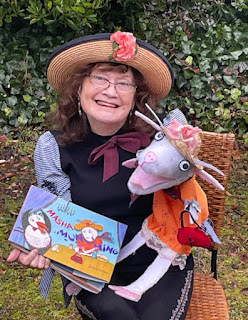
Amalia Hoffman and Sasha

Talented author/artist/creator Amalia Hoffman brings a new candidate to the scene in March with MASHA MUNCHING, a picture book with a story and central character that leaps off the page, "literally" and visually. Masha, the curious, clever, and ravenous goat, has an appetite for something new. She's in search of new faces, new places, and new tastes to please her ravenous palate. Dressed in one of her delightful frocks, she heads to town and finds a glamorous restaurant with countless offerings. What she sees and samples, though, are table offerings that provide a hint of home, not consuming the breads or pastries, but the straw basket they were served in. Or table legs, even tastier than the twigs in her daily menu. 

The very proper (uptight) headwaiter penguin finds Masha's enthusiasm to be appalling, despite Masha's delight and lovely compliments to the cuisine. But her preferences, patterns of behavior, and unabated enthusiasm for consumption soon wear her welcome thin. She (and the establishment) recognize that they are not a good match, so she returns home to friends who missed her. But she does so with a fresh outlook, developing a new take on old favorites, bringing with her a new friend to share in the fun of a barnyard bistro. One that welcomes noisy, lively participants with the manners of animals! 


Endpapers, MASHA MUNCHING

The robust colors, lively action-posed collage characters, and convention-busting choices of Masha and the other characters will have kids giggling or laughing aloud. The dimensional landscapes/scenes add a textured depth to the art, as do the themes of friendship, confidence, and openness to new people and experiences. The truth of the familiar phrase, "There's no place like home" doesn't diminish the parallel truth that "Home" can be as large and welcoming and evolving as your heart has the capacity to make it. 

Yeehoo Press,
Chinese & English versions 
March 2022
MASHA MUNCHING is  scheduled to release in March, 2022, and is available for preorder to share with kids for a vibrant virtual springtime at the farm!

Amalia Hoffman agreed to answer a few of my questions about her inspiration and creation of this new offering. With experience and understanding of just how busy an author can be in the weeks before a book launch, I'm especially grateful that she found time to join us.


SB: Amalia, your writing reaches out to many audiences and ages, on many topics. Can you share a bit about how MASHA MUNCHING first came into your mind and heart? 


Gefen Publishing House


AH:
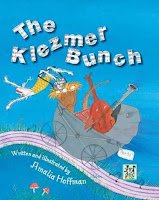
I have another book, The Klezmer Bunch, with a goat character also named Masha so that means that I have a soft spot for goats.  One day, I just came up with this alliteration: Masha Munching. That kind of sat in my brain for a while, till I came up with the idea of a goat that longs for great food. In the beginning, Masha was alone but I always wanted to create a book about farm life so I added pigs and ducks.


SB: When young ones read/listen to your story, is there a theme or message you intended? I felt the presence of several, but you were careful to focus on the entertainment first, always a wise choice!


AH: Yes, I definitely feel that there’s a theme and message in the story: Masha is tired of eating the same boring farm food every day. She says goodbye to her beloved friends and sets off on her search to find something else to eat.

Along the way, Masha discovers a wonderful restaurant where the waiter welcomes her in.

But Masha’s choices of “delicious foods” and her behavior don’t seem to be appropriate for restaurant dining.   The message of the story is that everything is tastier when shared with good friends and the freedom to behave like who you are. Masha returns to the farm and delights her friends by using her experience at the restaurant to make new dishes for them.

The theme of the book is that sometimes, we need to explore outside of our own limited horizon, only to discover that home is where we feel the most comfortable and safe.

Masha is curious. She needs to find out what’s out there. Her journey is one of discoveries and struggles along the way.

At the end, she chooses to go back home but the story makes it clear that the journey was well worth it. Masha has gained knowledge that she can put to good use. Now, she can enrich her friends’ life by using her experiences at the restaurant and making new dishes from the basic ingredients—hay and tree branches!


SB: Your use of collage and paper cuts are both intriguing and have a very “kid-magnet” vibe. The three-dimensional quality feels like it might derive from your experiences with paper constructions and retail window-dressing in your earlier years. The scenes are so colorful and engaging. Would you share a bit about how that three-dimensional aspect of your art moved onto the pages of picture books, and why you considered it a good fit for Masha and her story? Did you consider any other approaches?


AH:  I’ve always loved paper cuts. When I was a kid, my mom used to get me paper cut dolls. They came with assortments of cloths and I could dress the dolls by assembling the paper outfits on them. My sisters and I had a puppet theater that we created ourselves from a mix of newspapers and flour that mom cooked over the stove. My dad brought over a huge box which we turned into a theater. I was always intrigued by how the puppets could be manipulated. When I started designing window displays in major stores in NYC, I created 3D displays to draw attention to the windows. In Masha Munching, I wanted to convey the feeling that things are in motion so I used paper cut technique. I cut and color the elements by hand. I cover the board surface with Liquitex modeling paste and add textures by scraping the surface while it’s wet. When dry, I paint the background on the board. Then I glue all the cut-up elements on the board. When satisfied, I photograph the image. Sometimes, I add more textures, details and color in Photoshop.


SB: I can’t resist this question… Goats have become more popular critters ub current culture, with their strong personalities and capacity to eat nearly anything! At any stage of your life have you had personal experiences ( or relationships!) with goats? I know readers here would enjoy learning about that.


AH: Growing up in Israel, we spent our summers in a small village where farmers raised cows, chickens and goats. We used to laugh as the goats tried to nibble on our cloths and shoes. Each goat had a name. I found out that goats can remember their names and are very friendly! 


SB: I really appreciate your time and responses, Amalia, helping us learn more about you and your memorable new picture book character, Masha. I wish you great success with this project and with future ones, too.


I look forward to sharing Masha with readers. When I do I'll probably share the story a young visiting friend who was proudly wearing sparkly scrunchy bands on her pigtails while we visited a petting zoo. In a flash, one was being snatched by a goat, but I caught it just in time. She kept her ribbons, the goat has handed an actual food pellet, and all was well. Quick reflexes are a must around goats! I suspect many among the listeners will have their own goat-stories to share!


Sandy


Picture books are as versatile and diverse as the readers who enjoy them. Join me to explore the wacky, wonderful, challenging and changing world of picture books.