Showing posts with label curiosity. Show all posts

Dec 16, 2025

A Compelling CARBON Story: From Bam! to Burp!

 For anyone unfamiliar with Melissa Stewart, I urge you to check out some of my past posts HERE, HERE, HERE and click her name to check her website and her other amazing nonfiction books. Among those who read nonfiction picture books, she is an icon of excellence. For those who write (and teach with) nonfiction picture books, she is a generous and highly inspiring guide to the many aspects and uses and purposes of these materials. The back matter in each of her books make for informative and expansive reading, too, including diagrams, definitions, further examples, guides to inquiry, and usually an author note. All of these are rendered with appealing language and with colorful illustrations that serve as kid-magnets for further exploration. 

CHARLESBRIDGE, 2025


That sets a high bar, for Stewart, her various illustrators and publishers, too. She does not disappoint, and that's especially true in the case of FROM BAM! TO BURP! A Carbon Atom's Never-Ending Journey Through Space and Time and YOU! The little Carbon atom with big eyes is the star of a very active and time-spanning story, one that is the result of a student's question during an author visit in 2016. (Reading author notes and  illustrator notes can reveal so MANY rich insights like that one!)

Melissa's career in nonfiction means she has the answers to nearly anything that might be asked. Often, that is. But in this case a third-grader's curiosity about a stated fact left her wondering about the answers. Carbon is, of course, the building block of life on our planet., With its team of two OXYGEN atoms, CO2, is pictured appealingly by illustrator Marta Álvarez Miguéns, and CARBON stars on every page, as it should. 

Stewart's scientific statement was that we are all made of carbon atoms, and those same atoms could have been part of a dinosaur living on the other side of Earth 150 million years ago! The How? Where? When? inquiry from that curious young listener left Melissa wondering, too. That resulted in this action-packed, fast-moving, jaw-dropping story the role of CARBON in life as we know it. 

The end papers hint that CARBON can hide among many molecules, and the first spreads make sure that even quite young readers/learners can picture the variety of ways those carbon molecules move throughout time and space. Without tracing here the amazing arrival and journeys of carbon atoms on our planet step by step, I can't resist mentioning that about 4.5 billion years ago, "Old Earth" was smacked (BAM!) by another planet. That led to CARBON becoming part of our planet while the remnants of that early crashing planet coalesced into what we now know as our moon! That alone is a massive story that is effectively told in two spreads, grounding the story of Earth's layers and eventual evolution. The combination of a CARBON atom with two oxygen atoms makes it possible for CO2 to travel the global wind ways, for plants to develop photosynthesis, for dinosaurs to eat those carbon-filled leaves, and on through page-turning times and places and pancakes. That kids eat! And anyone who has ever burped knows that the next step in a CO2 journey could well be a burp! 

The entire story makes such clear sense that I raced through it to find and absorb the connections and impacts of the never-ending story of CARBON. Then, I immediately went back through the book again, examining the bright and expanding illustrations and digesting the clarity of CARBON's role in life. That has been an abstract nugget of science info for many decades of my life, but this gem of a book truly made that fact come alive. 

Stewart also offers back pages of more "Wonders", such as the ones posed by that curious kiddo during an author talk. That is followed by facing pages with a text descriptor and a scientific drawing of the CARBON CYCLE, and a page of excellent resources to discover more and to confirm that this remarkable story is accurate and verifiable. The author note is accompanied by an illustrator note, indicating that her collaboration with Stewart made her efforts more effective and successful. 

As I said above, each new offering Stewart releases meets and exceeds the standards of the best of the best in nonfiction picture books. This is one whose origin story is a powerhouse to share with kids. Stories, including nonfiction ones, begin with curiosity and questions! What a fine example of taking that inquiry to research and then write. Priceless. 


Aug 30, 2024

THIS BOOK IS FULL OF HOLES: I Like It A WHOLE Lot!

PEACHTREE, 2024


 As you can see from the cover, HOLES really spark curiosity. These curious characters and more populate the pages of THIS BOOK IS FULL OF HOLES: From Underground to Outer Space and Everywhere In Between, written by Nora Nickum and illustrated by Robert Meganck

(When you get your hands on this book, check out the BACK cover and endpapers to appreciate the extent to which illustrations set the tone for making something as mundane as HOLES a truly fun topic to explore with mind-expanding potential!)

The direct address and informative text approach is enhanced by arranging simple questions and explanations in attention-grabbing text colors and fonts, laid out in bright boxes and other shapes on pages with various characters demonstrating HOLES, even familiar ones, in ways readers may not have noticed them before. Some pages include elaboration of text from the basic Q/A pattern, explaining ways in which an archeologic dig can be considered a hole, how and where various holes develop, and even where one might feel concerned that holes exist at all! 

The range of examples take readers from their own school bus or yard through nature sites, games, and even the physics of holes, affecting the toys and sports equipment they use .From science to art to everyday life, readers will find themselves looking at their own lives with an eye out for holes and the ways in which they affect our lives. This is a great example of a timeless and worthy addition to home, school, and library shelves, combining solid information with entertaining language, visuals, and new thinking for young readers.

Speaking of classic and timeless, Maurice Sendak and Ruth Kraus created A HOLE IS TO DIG more than a half century ago. it has been reissued many times and some of the original prints are truly valuable. It can still be found in many libraries, and you can view a reading of it on YOUTUBE, HERE.

Aug 10, 2023

OUT and ABOUT: A Story of Giving

 If the name of author Liza Wiemer is familiar to you, it could well be from her contemporary teen novel THE ASSIGNMENT. It's an award-winning and globally successful story inspired by actual events in this last decade. If you haven't read it, I urge you to do so. 

It is often said/presumed that novelists and others who write for teens and adults struggle to write picture book text. In extended prose, the author needs to "illustrate" everything the reader needs to know and feel and consider with language.  In picture books, the text is not only drastically lower in word count, but each word must earn its place on the page. The text must also allow the illustrator  the space and respect and trust that visual narratives will not just mirror the text but provide as much or more of the storytelling as the words do. That is a challenging task for the illustrators but also for the author to determine what needs to be said with words and what does not. Wiemer has succeeded beautifully with her first endeavor into picture books. Her text and illustrator Margeaux Lucas achieve that masterful interaction of text and images that convey the heart and soul of a wonderful story. 


Kaliot Books.  August, 2023

OUT AND ABOUT: A Tale of Giving is written by award-winning author Liza Wiemer and illustrated by Margeaux Lucas. There is so much to enjoy about a well-told story in a picture book format, and this new offering provides both entertainment and heartwarming life lessons without being didactic. 

The illustrations, of course, enhance the qualities of Daniel and his family's relationships, which are both loving and supportive but also realistic in the personalities and playful approaches of their interactions. Daniel's keen observations, insatiable curiosity, and vivid imagination reveal a believable boy who sees any mysterious box as potentially fulfilling his dreams. 

Eventually, though, that observational curiosity allows him to put puzzle pieces together and realize that other peoples’ dreams matter, too. That's especially true when life circumstances place hurdles in the way of happiness. I especially enjoyed that Daniel developed his growing understanding and chose steps forward to participate in kindness without relying on prompts or explanations from the adults or older siblings. His final page decision about how to respond to the curiosity of his younger brother was a satisfying confirmation of the change he had embraced.

This narrative involves an accessible amount of text with page placement and font sizes resembling short passages of longer, full text. That is a great match for Daniel's character and for the skills of target readers' ages. It also reaches readers at their own developmental capacity to take the same steps of logic and empathy as Daniel does. 

A brief glossary, simple explanation/quiz about the Jewish principles of giving, MAIMONIDES’ EIGHT LEVELS OF TZEDAKAH, and a short author note expand this particular Jewish family experience into an informative resource as well as an opportunity to reflect on the universal value of giving in ways large, small, publicly magnanimous, and generously anonymous. 

Author Liza Wiemer writes from her heart at every level, and she has agreed to answer several interview questions about this story and its origins in a post on her BOOK BIRTHDAY, August 15.


Until then… stay generous and giving in the best possible ways.


Aug 15, 2022

Family/Friend Gatherings Amplify Joy: For Humans and For BATS

If you read this blog regularly you must have discovered that I am a fan of the talented writing and illustrations of Brian Lies (spelled like LIES but pronounced like CHEESE). I've reviewed many of his picture books, including one series feature a  colony of creative and distinctive bats (HERE)

Several of his BAT titles are written in rhyme, but not all. In each, there is one little bat who, inexplicably, wears yellow floaties at the base of his wings. Little Bat often appears on the final page turn, snuggled against his mother's chest as she flies them home to sleep at dawn.

LITTLE BAT has garnered much attention over the years. Recently, LITTLE BAT IN NIGHT SCHOOL offered  Little Bat a starring role in his launch into night school, with a clever story told in prose. (Take this mention as a timely reminder for anyone preparing first-timers to school. The gentle humor and recognizably mixed emotions will open discussions and provide good-hearted reassurance.)


Clarion Books, 2022
Now, Little Bat is back in LITTLE BAT UP ALL DAY. Just a year or so older, he has grown bold and curious enough to defy his mother's warning to NOT go out in the daytime. Why? More noise, more animals, ones he has not met. Ones who sleep at night while bats are about.

But Little Bat feels compelled to know about them, to get answers to his questions, to find new friends. In each of the prior books, readers see that long nights are very busy (and exhausting), making daytime snoozes necessary. But Little Bat's curiosity overcomes his heavy eyelids, leading him through the louvres and into open daylight.

The blinding light, noises, and unfamiliar landscape confuse him, until his desperate chirp reveals an echo of his familiar home. With the confidence of knowing where he is, he begins his search for new friends. He mistakenly seeks the attention of a hawk, but Rusty squirrel saves the day. He sets Little Bat on a safe path to move about in daylight.

This friendship story is exhilarating and appealing, with delightful details in text, emotional expressions, and imaginative actions and locations. As Little Bat dozes off time after time, denying it time after time, he must finally admit that he is a nocturnal fella who needs to go to sleep. 

Thus, almost as if star-crossed lovers, they part with the sense that their friendship was "not meant to be", as we say. Even so, when Little Bat is out after dark he retraces their play trail, making a very satisfying discovering. 

I adore the character development and personalities in each of the bat characters, (or any animal character from any Lies picture book). In this bat series I especially appreciate the ways in which the illustration elements have a sort of Russian nesting doll quality, with bits from early pages appearing in some ways later in the story, layering rich connections and depth into the events and the individuals. The same is true from one book to the next. For example, Little Bat's foray into school builds the internal skills and tools he needs to make this latest book's resolution feel natural and irresistible. The pop-up book gingerbread house in BATS IN THE LIBRARY foreshadow the friendship setting of this current book, too.

Each time I read and share a book by Brian Lies, whether in rhyme or prose, written by others or by the illustrator, and starring familiar characters like Little Bat or a new cast (HERE), I urge readers to check them out and explore them thoroughly. Once again, please do just that. You won't be sorry, and I am guessing that you will immediately be thinking of a young audience for whom this book would be perfect.

* * *

 My brief hiatus involved travel and visiting with family. Then, more travel for a week in LA to celebrate a joyous wedding with family and friends, old and new. It was my first trip to that coast. As a lifelong midwesterner, I had routinely wondered aloud how anyone would choose to live with the looming dangers of earthquakes and mudslides and more. In only a week I began to understand the appeal of the climate, casual friendliness, and curiosities that would make each day there an adventure and a great place to live. Now, like Little Bat, I am safely home and settled into my midwest way of life. Even so, that exploration confirmed that I'll make it a point to reconnect with the coast again in the future! Here's wishing you joyous times with family and friends, and open eyes to search out new and exciting explorations!


Mar 14, 2022

SCURRY! and WOOF! Remarkably Magical Nonfiction Appeal


I have a friend who is a gifted writer, but in recent years she has turned her available creative time to photography. Examples of her photos are increasingly breathtaking. What's more, in this past year she has taken the bold step to learn and explore painting- using various media and attempting a wide array of subjects. The works that she's shared are as lovely, thought-provoking, and powerful as her writing and photography. 

Her versatility and talents came to mind when I read these two nonfiction picture books by author/photographer Annette Whipple. The first to consider is SCURRY! The Truth About Spiders.

Reycraft Books, September, 2021

After an initial AWE response to the images, a careful examination of these two books will reveal several strategies and craft techniques to account for their excellence. Whipple has made the world of spiders utterly appealing! 

Here are just a few ways she accomplished this magical achievement.The obvious place to start is with the many spectacular photographs that inspire awe and also inform. Any viewer of any image will be ensnared in the web of color, charisma, and complex life of each of the many species of spiders Whipple's photos reveal. 

Using the often-recommended "trick" of focusing on the eyes makes a powerful beginning, (something that works with snaps of babies and even ZOOM shots!), but the creator of this magic turns those images of eyes into unforgettable factual content. Reporting eight eyes for spiders (at least for most), she follows with the surprising fact that most still have rather poor ability to see! Nevertheless, those eyes and their patterns are one of the most visible traits used by scientists and hobbyists in distinguishing one type of spider from another. This comprehensive exploration of spider with its superb blend of photos and facts becomes even more powerful with the artful use of some occasional spider-speaking cartoon questions, challenges, invitations, and incidental facts. 

Can you imagine what happens when Whipple tosses in ...language of the main expository text that's kid-friendly and focuses on the kinds of questions that curious kids will want to know? Lively details like eight legs? And what happens if one leg is eaten or breaks off? What are those two other things that look like arms? How can spiders make that silky web-stuff? And really? Spiders can control how thick or thin the web fibers are? How sticky or smooth? And web fibers are stronger than steel, when compared in weight and size? Oh, and they eat HOW? What's with so much HAIR? Seriously? 

What happens is magical.

These are only some of the fascinating aspects of spiders that will have kids (and adults) inspecting the images in the books, sharing facts with others, and even shifting their attitudes about live spiders they encounter. Just in case some readers are not converted by facts and images, the author even provides a page of suggestions for desensitizing those with engrained fears. 

Back matter serves anyone seeking to explore further, to take on some challenges, or to consider photographing and writing about other creatures would do well to use this as mentor text. I am certain there are countless kids who will be captured in the appealing web of this book.

Reycraft Books, June, 2021


If by any chance the topic of SPIDERS isn't doing it for you, who can resist DOGS?
WOOF! The Truth About Dogs is an irresistible presentation of DOG information, wisdom, and surprises. It also advocates for readers of any age to volunteer at rescue shelters as companions, playmates, and general helpers for canines waiting and hoping for a fur-ever home. 

The talent and strategies that shine in SCURRY! are center-stage in this picture book, beginning with the eyes on that cover! In this case, though, Whipple builds on the fact that so many DOG parts and patterns are familiar to readers. Then she uses photos and friendly phrasing to clarify, correct, and expand on readers' awareness of this ubiquitous but diverse species. The question/answer approach, compare/contrast text patterns, and the widely varied cartoon-comic dog characters with something significant to say keeps the pages turning and the information memorable. 

Back matter is kid-directed and also irresistible, with pages showing how to make a dog toy, compare breed facts and images, consider an instructional/safety page about how to app[roach an unfamiliar dog, images and insights revealing what volunteering might involve, and an answer to that frequent question: Are dogs just tame wolves?  

What, you can't really imagine I'd offer her answer here, can you? Get the book and read for yourselves!

These two titles belong in every library, many classrooms, and family homes. Both titles offer the allure of "coffee table books" in enticing and engaging casual audiences while also providing well-selected and curated informational content in ways that entertain and invite questions, further reading, or discussion. These titles also offer mentor examples for anyone considering writing nonfiction, for developing photographic skills, or even for those interested in using photos by others to enhance your text. 

Check them both out!


Jan 25, 2022

The Power of Personality in Picture Books: MASHA MUNCHING

Quick. Name an unforgettable picture book character. 

Go ahead.

Fast.

I suspect there's more than one, but I'll bet that the first one(few) who popped into your head were of the larger-than-life variety.  Fancy Nancy or Clifford or Pigeon and friends


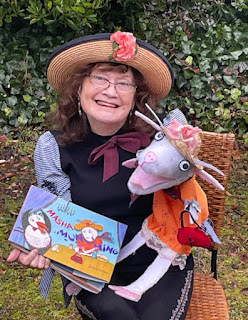
Amalia Hoffman and Sasha

Talented author/artist/creator Amalia Hoffman brings a new candidate to the scene in March with MASHA MUNCHING, a picture book with a story and central character that leaps off the page, "literally" and visually. Masha, the curious, clever, and ravenous goat, has an appetite for something new. She's in search of new faces, new places, and new tastes to please her ravenous palate. Dressed in one of her delightful frocks, she heads to town and finds a glamorous restaurant with countless offerings. What she sees and samples, though, are table offerings that provide a hint of home, not consuming the breads or pastries, but the straw basket they were served in. Or table legs, even tastier than the twigs in her daily menu. 

The very proper (uptight) headwaiter penguin finds Masha's enthusiasm to be appalling, despite Masha's delight and lovely compliments to the cuisine. But her preferences, patterns of behavior, and unabated enthusiasm for consumption soon wear her welcome thin. She (and the establishment) recognize that they are not a good match, so she returns home to friends who missed her. But she does so with a fresh outlook, developing a new take on old favorites, bringing with her a new friend to share in the fun of a barnyard bistro. One that welcomes noisy, lively participants with the manners of animals! 


Endpapers, MASHA MUNCHING

The robust colors, lively action-posed collage characters, and convention-busting choices of Masha and the other characters will have kids giggling or laughing aloud. The dimensional landscapes/scenes add a textured depth to the art, as do the themes of friendship, confidence, and openness to new people and experiences. The truth of the familiar phrase, "There's no place like home" doesn't diminish the parallel truth that "Home" can be as large and welcoming and evolving as your heart has the capacity to make it. 

Yeehoo Press,
Chinese & English versions 
March 2022
MASHA MUNCHING is  scheduled to release in March, 2022, and is available for preorder to share with kids for a vibrant virtual springtime at the farm!

Amalia Hoffman agreed to answer a few of my questions about her inspiration and creation of this new offering. With experience and understanding of just how busy an author can be in the weeks before a book launch, I'm especially grateful that she found time to join us.


SB: Amalia, your writing reaches out to many audiences and ages, on many topics. Can you share a bit about how MASHA MUNCHING first came into your mind and heart? 


Gefen Publishing House


AH:
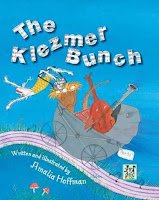
I have another book, The Klezmer Bunch, with a goat character also named Masha so that means that I have a soft spot for goats.  One day, I just came up with this alliteration: Masha Munching. That kind of sat in my brain for a while, till I came up with the idea of a goat that longs for great food. In the beginning, Masha was alone but I always wanted to create a book about farm life so I added pigs and ducks.


SB: When young ones read/listen to your story, is there a theme or message you intended? I felt the presence of several, but you were careful to focus on the entertainment first, always a wise choice!


AH: Yes, I definitely feel that there’s a theme and message in the story: Masha is tired of eating the same boring farm food every day. She says goodbye to her beloved friends and sets off on her search to find something else to eat.

Along the way, Masha discovers a wonderful restaurant where the waiter welcomes her in.

But Masha’s choices of “delicious foods” and her behavior don’t seem to be appropriate for restaurant dining.   The message of the story is that everything is tastier when shared with good friends and the freedom to behave like who you are. Masha returns to the farm and delights her friends by using her experience at the restaurant to make new dishes for them.

The theme of the book is that sometimes, we need to explore outside of our own limited horizon, only to discover that home is where we feel the most comfortable and safe.

Masha is curious. She needs to find out what’s out there. Her journey is one of discoveries and struggles along the way.

At the end, she chooses to go back home but the story makes it clear that the journey was well worth it. Masha has gained knowledge that she can put to good use. Now, she can enrich her friends’ life by using her experiences at the restaurant and making new dishes from the basic ingredients—hay and tree branches!


SB: Your use of collage and paper cuts are both intriguing and have a very “kid-magnet” vibe. The three-dimensional quality feels like it might derive from your experiences with paper constructions and retail window-dressing in your earlier years. The scenes are so colorful and engaging. Would you share a bit about how that three-dimensional aspect of your art moved onto the pages of picture books, and why you considered it a good fit for Masha and her story? Did you consider any other approaches?


AH:  I’ve always loved paper cuts. When I was a kid, my mom used to get me paper cut dolls. They came with assortments of cloths and I could dress the dolls by assembling the paper outfits on them. My sisters and I had a puppet theater that we created ourselves from a mix of newspapers and flour that mom cooked over the stove. My dad brought over a huge box which we turned into a theater. I was always intrigued by how the puppets could be manipulated. When I started designing window displays in major stores in NYC, I created 3D displays to draw attention to the windows. In Masha Munching, I wanted to convey the feeling that things are in motion so I used paper cut technique. I cut and color the elements by hand. I cover the board surface with Liquitex modeling paste and add textures by scraping the surface while it’s wet. When dry, I paint the background on the board. Then I glue all the cut-up elements on the board. When satisfied, I photograph the image. Sometimes, I add more textures, details and color in Photoshop.


SB: I can’t resist this question… Goats have become more popular critters ub current culture, with their strong personalities and capacity to eat nearly anything! At any stage of your life have you had personal experiences ( or relationships!) with goats? I know readers here would enjoy learning about that.


AH: Growing up in Israel, we spent our summers in a small village where farmers raised cows, chickens and goats. We used to laugh as the goats tried to nibble on our cloths and shoes. Each goat had a name. I found out that goats can remember their names and are very friendly! 


SB: I really appreciate your time and responses, Amalia, helping us learn more about you and your memorable new picture book character, Masha. I wish you great success with this project and with future ones, too.


I look forward to sharing Masha with readers. When I do I'll probably share the story a young visiting friend who was proudly wearing sparkly scrunchy bands on her pigtails while we visited a petting zoo. In a flash, one was being snatched by a goat, but I caught it just in time. She kept her ribbons, the goat has handed an actual food pellet, and all was well. Quick reflexes are a must around goats! I suspect many among the listeners will have their own goat-stories to share!


Sandy


Sep 4, 2021

Animals, Empathy, Curiosity

 Boys are weird, right? Girls are, too, you say? I'd agree with both, if we can all agree to remove the denigrating label of "weird" and insert "interesting individuals". 

Sounds easy, but it is actually one of the hardest things any of us, at any age, can try to do. I'm going to reference a Walt Whitman quote here, with a note at the end of this post about why it was top of mind. The quote:

BE CURIOUS, NOT JUDGMENTAL.

I'm generally a fan of Whitman's wisdom, but this particular thought/line stands out as a perfect fit for the two picture books featured in this post.

KANE MILLER EDC PUBLISHING, 2021


Let's begin with LEO AND THE OCTOPUS, written by Isabelle Marinov and illustrated by Chris Nixon. Readers quickly learn that Leo is a neuro-diverse boy who finds bright colors, noises, and much of a child's world to be too much. He declares on an early page, "I must be living on the wrong planet." Other kids didn't understand him, and he didn't understand them. 

The public aquarium offers a respite and a potential friend. Colors and sounds are muted. If you've ever been to a public aquarium you'll slide right into Leo's experience: water and creatures move at a slower pace, voices are muted, and water plants offer gentle motion while staying anchored in their places. 

The octopus keeper is not judgmental, he is observant and curious, recognizing those same traits in Leo. With keeper's encouragement and acceptance, Leo launches a personal mission to learn all he can about Octopuses, sharing those facts via a notebook on several spreads. Impressed, the keeper invites  Leo to interact with Maya the octopus, providing ever more challenging puzzles. All of which Maya solves, abby the way.

One afternoon Leo notes that a particularly large, noisy crowd is stressing out Maya. (Read this wonderful book to discover how he knew that.) His empathy and concern allow Leo to solve his own puzzle, figuring out how he might support and protect his new friend. Leo's experience with Maya (being curious, non judgmental, and learning more) allow him to apply those strategies with an actual human, one who appears curious, too.

It seems that books (and films) revealing the astonishing complexity, intelligence, and emotional capacity of octopuses are having a moment. This story and others lead me to root for that trend and hope it expands and sustains. This story has so much going for it in fostering empathy and awareness of neurodivergent children, but it is much more than that. Even with the neon orange color accents, the tone and pace of the text and the images create a subdued, supportive, and engaging structure for readers of all kinds to dive right in to the story, and into the discussions it could spark. 

In one line Leo says he feels like an alien in the world surrounding him. If you've never met a kid who has felt that way, you've never met a kid, period. Finding and sharing this book could provide those kids with the experience Leo has when he meets Maya the octopus- perhaps there ARE other "aliens" to keep him from feeling alone.

GREYSTONE KIDS, September, 2021


That first picture book is firmly anchored in realistic circumstances and science, even though fiction. The facts Leo shares are true, and the situations are highly possible. Compare that to September release, MY DOG BANANA, written by Roxane Brouillard and illustrated by Giulia Sagramola. What's so curious about this book? Kids love dogs. They walk dogs. They name dogs unique (not weird) names. Books are written and illustrated about such situations.

Even so, I venture to say none of those books would be quite like this one. With minimal text, and very simple, cartoon-like  illustrations, a boy walks his dog, BANANA, on a leash. The curiosity occurs when others notice that the dog appears to be an actual banana.That's when bypasses challenge the simple statement that this is a dog, Banana. Questions aren't asked. Instead, challenges are mounted, detail by detail, while the boy maintains that she is a tired, well-trained, very speedy dog. 

When the challenges turn to mocking taunts and laughter, the boy walks Banana away, with a surprise ending, leaving behind a very puzzled and, hopefully, curious crowd. Perhaps if they had been less judgmental to begin with they could have had some of their questions answered!

At the risk of going far off the picture book rails, I'll mention that I have become a major fan of the streaming series, TED LASSO. Before you click out to catch a clip, be aware:  The F-word and other explicit language and adult references-ratio-to-minutes-of-play is really HIGH. Despite that,  other than for the youngest, I consider it a wholesome and big-hearted series in which jewels of wisdom are scattered like peanut shells on a bar floor. Humanity and decency is celebrated among the wacky situations, witty laughs, and dialogue so fast-paced and dialect-laden that I've rewatched episodes and still find things that I missed on earlier pass(es).

I mention that because the Whitman quote rose to mind with these books due to a particular Ted Lasso episode. The scene that allowed to reference this quote within the post can be found on YouTube (in an  abbreviated 4-minute form, but with a few choice words intact- be warned). It is called DART GAME. Ted Lasso and other scenes like these may not be the best way to approach the concept of reserving judgment and being curious for our youngest audiences, but these two new picture books could be. Give them a close look. When kids encounter someone who is "interesting in unusual ways", wouldn't it be great if their go-to reaction was to be curious and engaging rather than challenging and labeling? 

I'm firmly in Walt Whitman's (and Ted Lasso's) camp on this one.


Picture books are as versatile and diverse as the readers who enjoy them. Join me to explore the wacky, wonderful, challenging and changing world of picture books.