Showing posts with label Civil War. Show all posts

Mar 9, 2022

Seeking Freedom: Do NOT Miss Reading This Important Nonfiction Account

 When it comes to CIVIL WAR names and heroes, do you know this one… GEORGE SCOTT? 

Astra Books for Young Readers
Calkins Creek, 2022


I’m guessing you don’t.  I certainly didn’t.
 

What’s more, the story surrounding Scott's contributions to ending slavery were unknown to me, and to many others. 


SEEKING FREEDOM: The Untold Story of Fortress Monroe and the Ending of Slavery in America is written by Selena Castrovilla and illustrated by the incomparable artist E. B. Lewis. The rich details, character, and intensity of the text are enhanced and expanded by those same qualities in the illustrations. Every dramatic element is made more so by such detail, from the lichen on the barks of trees to the opening note about when and why certain word choices were made, to revelations of personality and character, especially in George Scott and the other central player, little-known hero, Major General Benjamin Franklin Butler, commander of Fortress Monroe in Virginia. I can't begin to imagine the extent of research that preceded the writing and illustrating of this remarkable picture book. 


I won’t include spoilers in these comments, which limits the scope of what I can share. 


This much, though, is essential to understand. GEORGE SCOTT was, in the language of the time,  a “runaway slave” (actually a freedom-seeking enslaved man). He had spent two years in a wild-wooded area not far from the fort, surviving by intelligence, cunning, and sheer determination as states seceded and war with the North began. His encounter with General Butler takes place in the early pages of this book when he risked exposure and return to his “master” by entering the fort to offer to work in support of the North. 


Both men took remarkable risks in pursuing this course of resistance to the established law that said enslaved people were the property of their owners and were required to be returned to them. Butler chose to defy this process by calling freedom-seeking refugees from slavery “contraband”, using that legal “property” label to justify retaining them as living spoils of wartime, which could supersede the Fugitive Slave Act. He was depriving the rebels of a valuable war-making resource.


Could that tactic actually work? Would it destroy Butler’s career, returning the many desperate freedom-seekers to enslavement? Or would it challenge the institution of slavery and begin a process to settle that question once and for all? 


The historic account that provides answers to those questions, and more, is revealed with dramatic art and suspenseful storytelling. Scenes involve President Lincoln, Congressional action, spying, a near-death escape, as well as post-war developments. Be sure to read the impressive back matter that further explores the post-war lives of these two heroic men, as well as the political decisions affecting both of their lives, and more. Sources for research and quotations are provided with acknowledgements of the historic sites and their curators, without whose involvement this book could not have been completed.


The most essential questions and causes of our deadly CIVIL WAR are launched and confronted within these pages and I am still shaking my head in wonder that I had not heard this account before. I believe you will do the same. After you read it, and I urge you to do so, soon, I feel certain you will be recommending it far and wide, across many ages and interests. 


And I doubt you'll ever forget George Scott and his role in ending slavery in America.


Mar 5, 2022

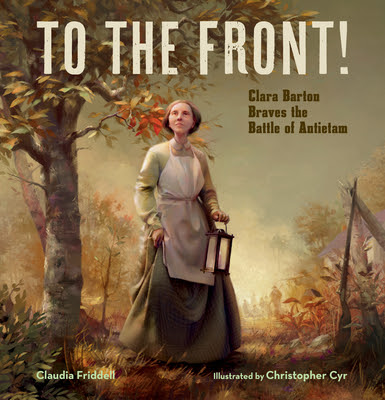
TO THE FRONT!

As I type this, Ukranians of every age, interest, gender, and background are finding "The Front" of an  uninvited, unwanted, and unjust invasion by Russia at their front doors. I wish them well and hope that their individual stories of bravery will make their way to a wider public, on the page or film or screen, after they have sustained a free and independent country against this onslaught. I listened to a report today by an emergency physician who is giving one-hour intensive lessons to everyday citizens to provide instruction and equipment meant to save lives- tourniquets, sutures, and other procedures that should require medical training to learn. Wash, rinse, repeat, hour after hour. I struggle to decide who is the greater hero, the doctor, exhausting himself and knowing the likely futility of his efforts and theirs, or the individuals who are willing to step up, to do SOMETHING to try to save lives and make a difference. None were giving in to feeling overwhelmed, they were simply moving forward.

Calkins Creek, 2022
Astra Publishing House


That's very much the frame of mind of Clara Barton and her crew of volunteer men. TO THE FRONT! Clara Barton Braves the Battle of Antietam is written by history-lover and storyteller Claudia Friddell, with evocative and informative illustrations by Christopher Cyr. This is a revelation of the early acts that distinguished Clara Barton as a brave, dedicated, and knowledgeable woman whose efforts were essential in saving lives and reducing suffering among the wounded soldiers during the Civil War. Friddell sets the stage for these harrowing scenes by blending actual text from Barton’s journals in blue font, paired with the author’s own free verse text in three-line stanzas and full paragraphs. This clear-eyed but dramatic account relates events through intimate perspectives of Clara’s wagon, Clara’s men, Clara’s hands, Clara and the doctors, her discoveries, her comforting, her endurance, her impact. 


Clara’s own words and the author’s text weave seamlessly but distinctly. Together they forge an effective trail that leads readers into the battlefields, into her makeshift and groundbreaking support efforts, and into connections and empathy with Clara, the doctors, the men who volunteered to serve as her team, and the victims of war. Back matter includes short perspectives on Clara, the consequences of her efforts, her personal missions before and after the war years, and her connections with other leaders of the time.


The bibliography and notes included offer a wealth of reliable resources to answer curious questions or launch further research. The illustrations are also a rich source of historic information, tone, social patterns, and gender expectations. The shifting perspectives of panoramic scenes and close portrayal of Barton’s reactions and worries feel theatrical and compelling, raising the suggestion that a nonfiction story told this well would make a valuable film or video. 


The name “Clara Barton” is one of the better known in American history, yet the extent of what most would know about her could fit on a JEOPARDY “answer” cue. A deep dive, as this is, dense with well-selected and appropriately placed primary source quotations, is exactly what it takes to waken all of us, at any age, to the full truths of Clara Barton’s life, and of our national history. 

Nov 9, 2021

TAD LINCOLN'S RESTLESS WRIGGLE: An Unbeatable Nonfiction Picture Book

Calkins Creek, 2021

Other than actually reading wonderful books, there are few things I enjoy more than supporting fabulous picture books. Perhaps the one thing that wriggles close to that special place in my heart is cheering for the talented creators of those books, since  I know I can count on them for even more wonderful books in the future. That's why I was  honored and excited to feature author BETH ANDERSON in an interview (HERE)  about her October release, TAD LINCOLN'S RESTLESS WRIGGLE: Pandemonium and Patience in the President's House, illustrated by S. D. Schindler. 

I deeply admire Abe Lincoln. Specifically,  I respect his humanity, his vulnerability, his morality. Even so, it's not as if we NEEDED another book about Lincoln for young readers, did we? If you want to test the limits of the internet, do a search for LINCOLN PICTURE BOOKS and be prepared to scroll endlessly! Despite that, we did, indeed, need this book.

Tad's story is a rarity, and is told to perfection in Anderson's new nonfiction offering. Tad's peculiarities and his relationship with his Papa have not been readily available for any of us, but especially not for young audiences. Before (or after) reading my thoughts and review, please take a moment to read Beth's responses to my questions about her process in developing this manuscript, including the ways that she researched and realized that her original story idea would become a subplot within a better story, one that would resonate with kids across time. 

Anderson's revelations and insights involving Tad encompass Civil War history, individual differences, social and political expectations, creativity, and patterns of daily life in THE PRESIDENT'S HOUSE, now commonly referred to as THE WHITE HOUSE. Written with heart and humanity, the story of a tender and mutually supportive relationship between Abe and Tad stretches across the complex scaffolding of a year of grief, stress, and exhausting demands. High-energy and always innovating,Tad struggles with articulate speech and self-regulation while his Papa suffers the intense grief of his other son's recent death, the cruel pain and loss of life from Civil War battles, and the competing pressures for his time and attention from top echelon politicos to every day citizens with individual concerns. 

Interior, S.D. Schindler: Tad Lincoln's  Restless Wriggle
2021

Tad's introduction begins at birth, when his restless wriggle inspires Abe's nickname for him- Tad, as in tadpole. It's a perfect start to this narrative. The main text extends across a year of Tad's preteen life in which the course of the war, personal grief, and Tad's efforts to prove his worth emerge through a series of (well-documented) anecdotal episodes in which Tad tests the patience and tolerance of most adults in his world. Any young reader now, or in the future, will likely empathize with Tad's well-intentioned decisions and impulses that go both comically and crushingly wrong. The President is criticized often for being too easy on "the boy", for sparing the rod and spoiling the child. Just look at illustrator Schindler's  interior spread.

What Anderson's narrative and scenes reveal is a range of powerful and emotional bonds that strengthened and soothed Abe in his darkest hours.Tad's deep love of Papa and the solace he took from unconditional acceptance and encouragement, from sensing his father's respect and pride, allowed Tad to bear the teasing and open rebukes he faced from adults and children alike. 

S. D. Schindler, Interior, Tad and Abe at table


Before reading this I had often heard (and read) of Lincoln's wit and humor, of the effective ways he used that spirit to defuse tense situations, to elevate the entertainment value of his popular storytelling, and to emphasize a point without being offensive. That is an endearing quality in anyone, but especially in someone maneuvering the levers of power and burdened with the consequences of his choices. 

In this revelatory narrative about Tad Lincoln and his very special needs and strengths, that capacity for humor and wry insight served Lincoln's parenting immeasurably. That old saying about facing challenges is often true:

If you can't laugh, you'll cry. 

There was no lack of tears during Lincoln's life, especially during his presidency. The opportunity to chuckle, to put an upbeat spin on Tad's eager actions undoubtedly relieved inevitable pain and tears. From any number of accounts in adult writings, Lincoln struggled with depression/melancholy and Tad's loving, laughing spirits may have been the very balm Abe needed most. 

Back matter notes provide further indicators of the research and revelations that led to Tad's starring role in this new picture book. Anderson is careful to clarify how and why she selected her descriptions about Tad's physical or neuro-diverse patterns, since documentation was scarce and certainly limited by the era in which any form of evaluation was done. This is a characteristic of Anderson's writing, that students, teachers, and readers in general can rely on content presented to be verifiable and accurately described. 

Before reading this I expected to be impresses and entertained. I did not expect to be so moved and to gain even greater respect for Papa Lincoln, and nor for his son, Tad. For that, I am grateful to the author and to the illustrator. And, as I said above, I'm expecting future exciting offerings from both.


@Bandersonwriter (Pinterest, Twitter, Instagram) 

FACEBOOK


TAD LINCOLN’S RESTLESS WRIGGLE: PANDEMONIUM & PATIENCE IN THE PRESIDENT’S HOUSE, 
illustrated by S.D. Schindler, Calkins Creek 
OCT 5, 2021

As I hoped, Beth will have some exciting releases scheduled in coming seasons. Just note that the current issues with production and shipping may shift the indicated dates later. Even so, when publication details are confirmed, I'll be sharing news and reviews and maybe even interviews about these anticipated releases wen the time comes:

REVOLUTIONARY PRUDENCE WRIGHT: LEADING THE MINUTE WOMEN IN THE FIGHT FOR INDEPENDENCE,
illustrated by Susan Reagan, Calkins Creek. Spring 2022

FRANZ’S PHANTASMAGORICAL MACHINE, illustrated by Caroline Hamel, Kids Can Press, spring 2022.

THOMAS JEFFERSON’S BATTLE FOR SCIENCE: BIAS, TRUTH, AND A MIGHTY MOOSE, illustrated by Jeremy Holmes, Calkins Creek, Fall 2023.


Mar 18, 2021

The Fighting Infantryman: The Story of Albert D. J. Cashier, Transgender Civil War Soldier

Before I resume my links to some of the amazing titles on the 2021 NOTABLE TRADE BOOKS FOR YOUNG READERS, I want to insert a few reviews of the books I had NOT yet read, books that this list led me to discover. I try very hard to stay aware of current releases throughout the year, but this annual list ALWAYS leads me to previously undiscovered treasures. My massive hold list has paid off and many of these are now stacked beside me as I type. I've read them all and will share many, but this title rises to  the top and comes first.

little bee books, 2021

THE FIGHTING INFANTRYMAN: The Story of Albert D. J. Cashier, Transgender Civil War Soldier is written by Rob Sanders and illustrated by Nabi Ali. Additional credits acknowledge consultants and sources for this remarkably well-researched and brilliantly developed portrait of an important American. 

 This Civil War era true story is a 2021 NOTABLE TRADE BOOK for YOUNG PEOPLE, and it certainly deserves that designation. Albert D. J. Cashier is the name chosen by a person who was born a girl, Jenny. During her early years  in Ireland, Jenny wore boys' clothes often: to tend the sheep in the field, to stay safer as a stowaway on a ship to America, and to work in a shoe-making factory at a job that was only open to boys. When old enough to head  out into life alone, Jenny continued dressing as a man (a small but hardy and hard-working man) and took their step-father's last name.

There are other stories of women who participated in Civil War service by dressing as men or boys, a few fighting, but many serving as buglers, drummers, or in medical service. Most resumed lives as women after the war ended, and only a few received veteran pensions.

In the case of Cashier, he enrolled to fight, passing the inspection when only his small hands and feet were examined and judged to be fit enough to fight. Throughout four years of full battle engagements, Cashier developed the trust and friendship of the other men in his group before returning safely to Illinois. 

After decades of life as a working man man on a farm, living on limited incomes and his small veterans' pension, health issues revealed that Cashier was a biological woman. When reporters got wind of it, the pension was denied, he was transferred to a women's hospital, and was even forced to wear women's clothes. It was visits from his former veteran friends, and their relentless insistence on the identity of Cashier as the veteran at whose side they lived and fought, that won back Cashier's well-earned pension.

I'm not marking this as a spoiler, because this is not a fictional mystery or suspense story. This, in fact, is a real life story, one that has been little known, and should be. Despite the general culture of the time, his friends acknowledged his value as a human, as a whole person of value, insisting on a military burial with honors and a tombstone marked with his chosen name and designation as a veteran.

More should know his story, and that of the many others whose chosen identity should be respected. Despite my extensive summary, the actual reading will enthrall you with its storytelling quality, intriguing details, and balance of information and sensitivity.

The author provides backmatter that fully honors the identity and intents (and unknowns) of Cashier's life. Since he was illiterate (signing his name with an X when voting, which he did faithfully) and having dementia in later life, we only know pieces of his story. Did Jenny find that assuming the role of a man provided her with greater comfort, safety, and wider choices, sustaining that throughout her life? Or Was Jenny a truly transgender man, born with a clear inner identity that did not match his body, living in times in which that reality demanded secrecy and isolation. 

We'll never know with certainty, but the author used consultants and sources that widen readers' awareness of transgender life experience long before it finally broke through a social curtain of shame and attack. That also line is not to suggest that pushback has disappeared, but at least more are willing to act with the integrity of Cashier's friends and allies.

This is handled in direct and respectful way with empathy and grace, and is suitable for even young  readers. In fact, it may be exactly the book needed by some young readers who struggle with gender dysphoria, and for all those who do not, but lack an understanding of how important it is to advocate for friends.

It's been a while since I've tagged a post with a COVID 19 comment. This has been the first full week of a global CORONA-versary, so I will acknowledge that. These anchors in time reveal to me that the abnormal has become normal. It also reminds me that I'm not comfortable with that language, or even calling this way of life a "new normal". I've become hyper-sensitive to the use of the word and the idea of "normal" . ( I've felt that sensitivity throughout my life, it is just more confirmed now that ever.)

This story is a reminder that "normal" assumes too much, that narrow perspectives lead to injustices and misjudgments about others and, often, about ourselves. Perhaps a full year of masking ourselves for the sake of our wider community/society should serve as a metaphor for new ways of walking through life. Wouldn't we all be safer, stronger, and likely wiser, if we observed a literal and figurative "mask" on our commentaries and attempted controls on the lives of others? Wouldn't we feel that much safer and saner and stronger if we knew that others were allowing us and (everyone else) the space to live our lives without judgment from those who have not had the same experiences, in the wide world or within inner lives?  I

I'm practicing that now, and gradually improving. I hope that anyone who reads this book might reflect on that. This is especially true for adults. Kids are already very open to the ways of others, until adults insert/transfer their own boundaries and labels and limitations. Books like this serve all of us well. 

I had posted this only a few hours before coming across this SHORT testimony by the father of a transgender daughter. It doesn't take long to view/listen. It is also another example of the fact that discussions of this topic (and others) effect INDIVIDUALS and their families, as in Cashier's story above. When anyone attempts to regulate society, they are causing injury to individual lives. Here's the short link, if interested: 

A dad's testimony in defense of his daughter.


Picture books are as versatile and diverse as the readers who enjoy them. Join me to explore the wacky, wonderful, challenging and changing world of picture books.